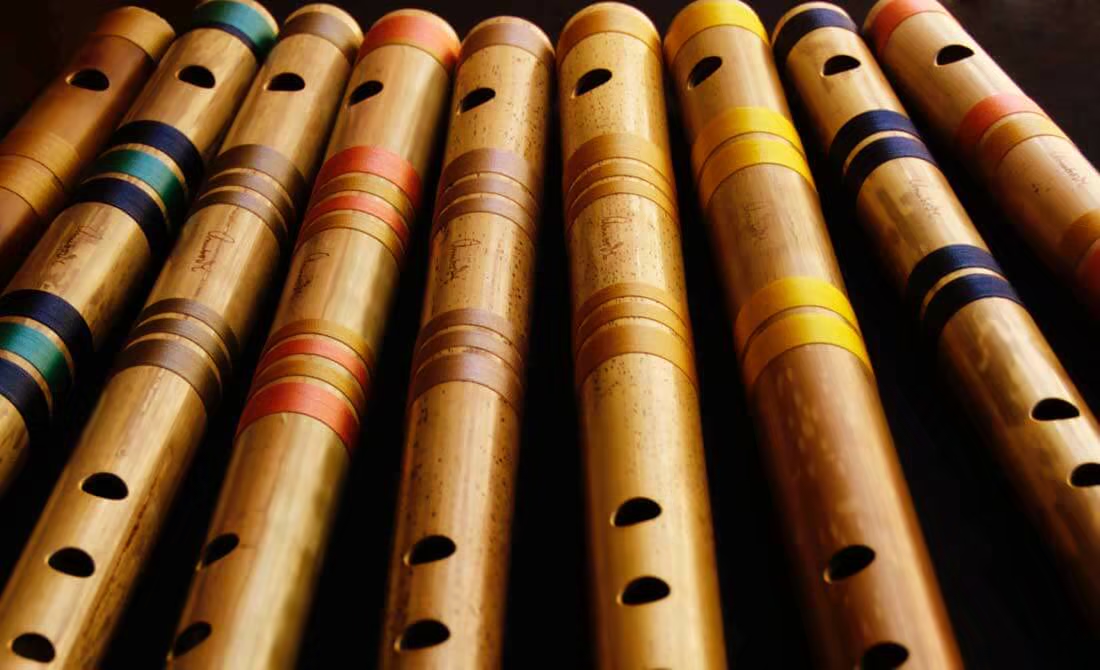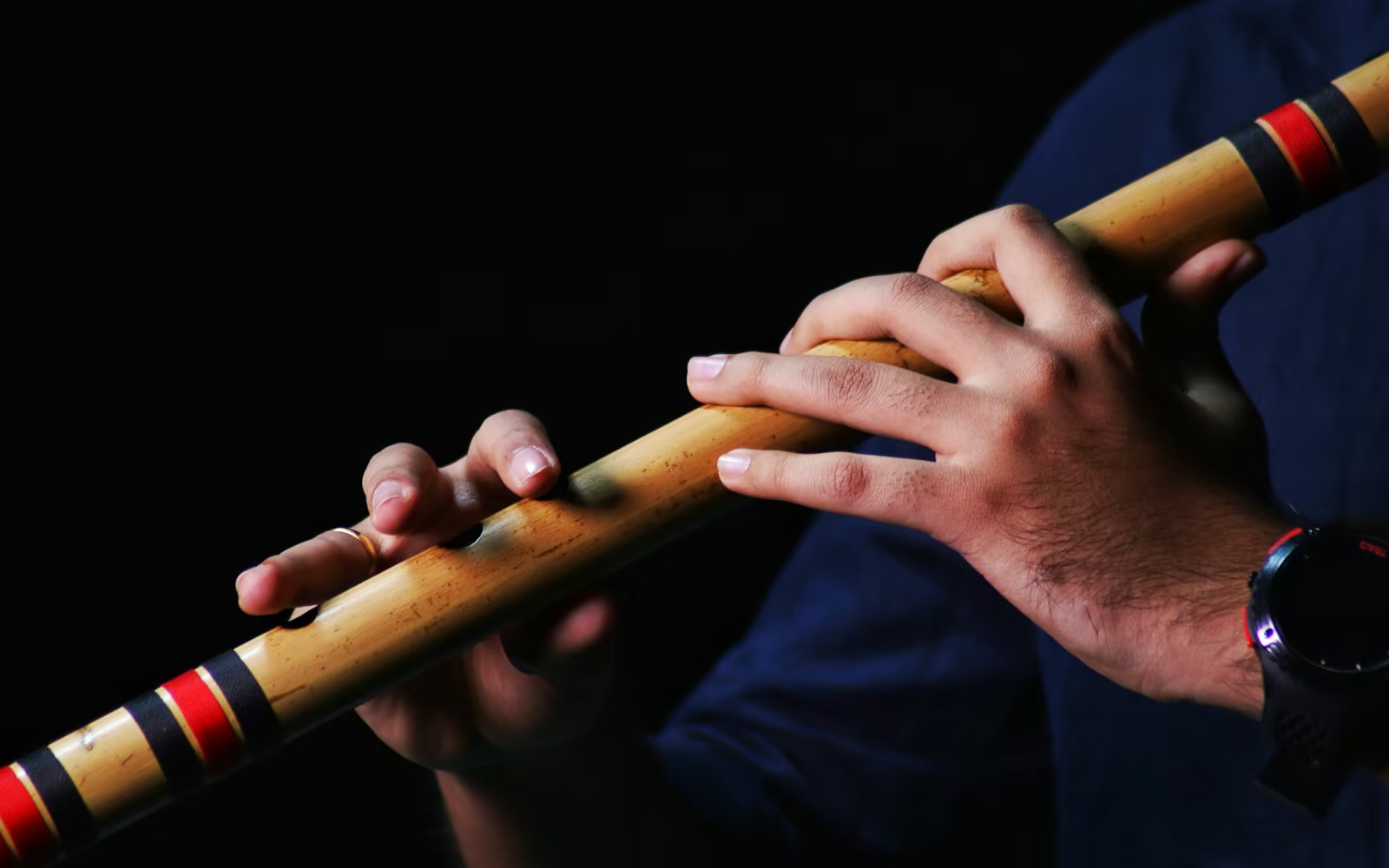
The bansuri is a simple bamboo flute, but its simplicity is deceptive. Six holes drilled into a hollow reed of bamboo — no keys, no pads, no mechanical assistance. And yet in the hands of someone who has spent years in relationship with it, the bansuri can produce a sound so human, so trembling and alive, that listeners sometimes find it difficult to separate what they are hearing from their own breath.
This is not accidental. The bansuri was never designed to be a concert instrument. It was designed to be a devotional one.
A Living Lineage
The bansuri appears in Indian culture more than three thousand years ago, most iconically in the hands of Lord Krishna. The mythology is deliberate: Krishna does not play the flute to perform. He plays it to call — to draw the gopis out of their homes and into the forest, to draw the soul out of its preoccupations and back into the present. The sound of the bansuri, in the Indian tradition, is understood as a sound that dissolves the boundary between the inner world and the outer one.
This is not merely poetic language. It describes something experiential that practitioners and listeners have known for centuries, and that modern neuroscience is now beginning to explain: certain sustained, breath-based tones have a measurable effect on the autonomic nervous system. They slow the breath. They widen attention. They lower the threshold between ordinary waking consciousness and something softer and more receptive beneath it.
The lineage of bansuri in classical Hindustani music is long and distinguished. Pandit Hariprasad Chaurasia, widely regarded as the master of the modern bansuri, brought the instrument from its folk and devotional roots into the center of classical concert tradition. His playing — long melodic arcs over gentle drone, notes that seem to hover and then dissolve — gave the instrument a vocabulary that the world heard and recognized as something rare.
The Instrument Itself
A traditional bansuri is made from a single section of bamboo, most often sourced from Assam or Karnataka in India. The best bamboo has been dried slowly over months or years to develop its full resonance. Too green and it is flat and unstable. Too old and it becomes brittle and loses its warmth.
The flute is transverse — held sideways, like a Western concert flute — and played by directing a narrow column of air across the embouchure hole. Unlike most Western instruments, the bansuri has no standard system of tuning among its finger holes. Each instrument is handmade, and the tuning is shaped by the craftsman’s ear. This means that each bansuri has its own voice, its own slight idiosyncrasies, its own way of bending a phrase. Players often speak of being “in relationship” with a particular instrument, the way one might speak of a longtime collaborator.
The most common sizes range from small sopranino instruments in the key of G or A, to the large bass bansuri in B-flat or A-flat — two feet of bamboo that produces low, cavernous tones. For sound healing and ambient work, I most often reach for the middle range: C and D flutes, which sit in a register close to the human voice and carry well through a room without sharpness or strain.
Breath as the Medium
Unlike keyed wind instruments, where the mechanical action of the key does much of the work, bansuri is entirely breath-dependent. The tone, pitch, dynamics, and color of every note is shaped by how air moves through the body and across the embouchure hole.
This creates an unusual situation: you cannot separate the player from the instrument. The bansuri does not function without a body. It is a direct amplification of the breath — which means that practicing it is, in some important way, a practice of learning to breathe.
When the bansuri is new, the student works to produce a clear tone. This alone can take months. The tendency is to force — to push more air, to grip the instrument more tightly. But the flute resists this. Force produces a thin, airy, or flat sound. What produces a full, centered tone is release: a relaxed embouchure, a soft jaw, a low and open breath. The instrument teaches surrender before it teaches anything else.
This quality is what makes bansuri such a natural instrument for healing contexts. The playing of it requires the same physiological state that we are trying to create in our listeners. I cannot play well when I am anxious. I cannot sustain a long, warm tone while holding tension in my chest or jaw. The instrument calibrates me as I play it, and through that calibration, something is transmitted to everyone in the room.
Microtones and the Space Between Notes
Western music largely operates within a twelve-tone equal temperament system — a compromise tuning designed to allow any key to sound roughly the same as any other. It is a system built for versatility and harmonic compatibility. What it sacrifices is the expressive range of microtone — the notes between the notes.
Indian classical music, and bansuri in particular, operates differently. The raga system is built on a set of melodic frameworks, each with its own ascending and descending scale, its own characteristic phrases, its own emotional quality, and its own time of day or season with which it is associated. Within this framework, the specific ornamentation of each note — how it is approached, bent, held, released — carries as much meaning as the note itself.
Bansuri playing uses gamak (rapid oscillations), meend (sliding between pitches), and khatka (ornamental turns) to give each note its full emotional life. These techniques are not decoration. They are the grammar of the musical language. And because they require continuous breath manipulation — no key can do it for you — they keep the player in a state of constant physical attention and presence.
For listeners, especially in healing contexts, this microtonal language communicates something pre-verbal. The slide of a note from one pitch into another moves something in the body that a clean, mechanically precise interval does not. It sounds human. It sounds like longing, or tenderness, or the feeling of setting something down.
Playing in Raga
I am often asked whether I compose the music I play in sessions or whether I improvise. The honest answer is: neither, and both.
Raga is a framework for improvisation that is simultaneously highly structured and completely open. Each raga has its defining phrases, its characteristic movements, its emotional essence. Playing in raga means internalizing that essence so deeply that the improvisation that emerges is both free and grounded — not random, not arranged, but alive.
What this means in practice is that a session that uses raga is never the same twice. The atmosphere in the room, the time of day, the collective breathing of the people gathered — all of these shape what emerges. Some sessions call for the slow, expansive gravity of Yaman, with its raised fourth and its association with twilight and longing. Some call for the intimacy of Bhimpalasi, with its quality of gentle sadness dissolving into peace. Some call simply for drone and long tones: no melody at all, just the vibration of sustained breath.
The music is always a conversation — with the room, with the people in it, and with something I can only describe as the sound itself, which seems at times to have its own intelligence about what wants to happen.
What the Flute Teaches
In ten years of practice, the bansuri has taught me more about listening than any other discipline. Not listening as a technical skill — not ear training or transcription — but listening as a way of being. The willingness to be still. The capacity to hear what is actually happening rather than what you are expecting to happen. The ability to follow a phrase to its natural end rather than forcing it toward a predetermined conclusion.
These qualities, I have come to believe, are not separate from the healing that the music facilitates. The same quality of listening that makes the music alive is the same quality that creates safety for the people receiving it. When a listener feels genuinely heard — not by words, but by the sound itself shifting in response to the atmosphere they carry — something in them releases.
The bansuri is three thousand years old, and it is still teaching.