I have tried recording in studios. Acoustically treated rooms with controlled reflections, isolated booths, climate-regulated silence. The music I made in those spaces was clean. It was precise. And it was, almost without exception, missing something I could not name at the time.
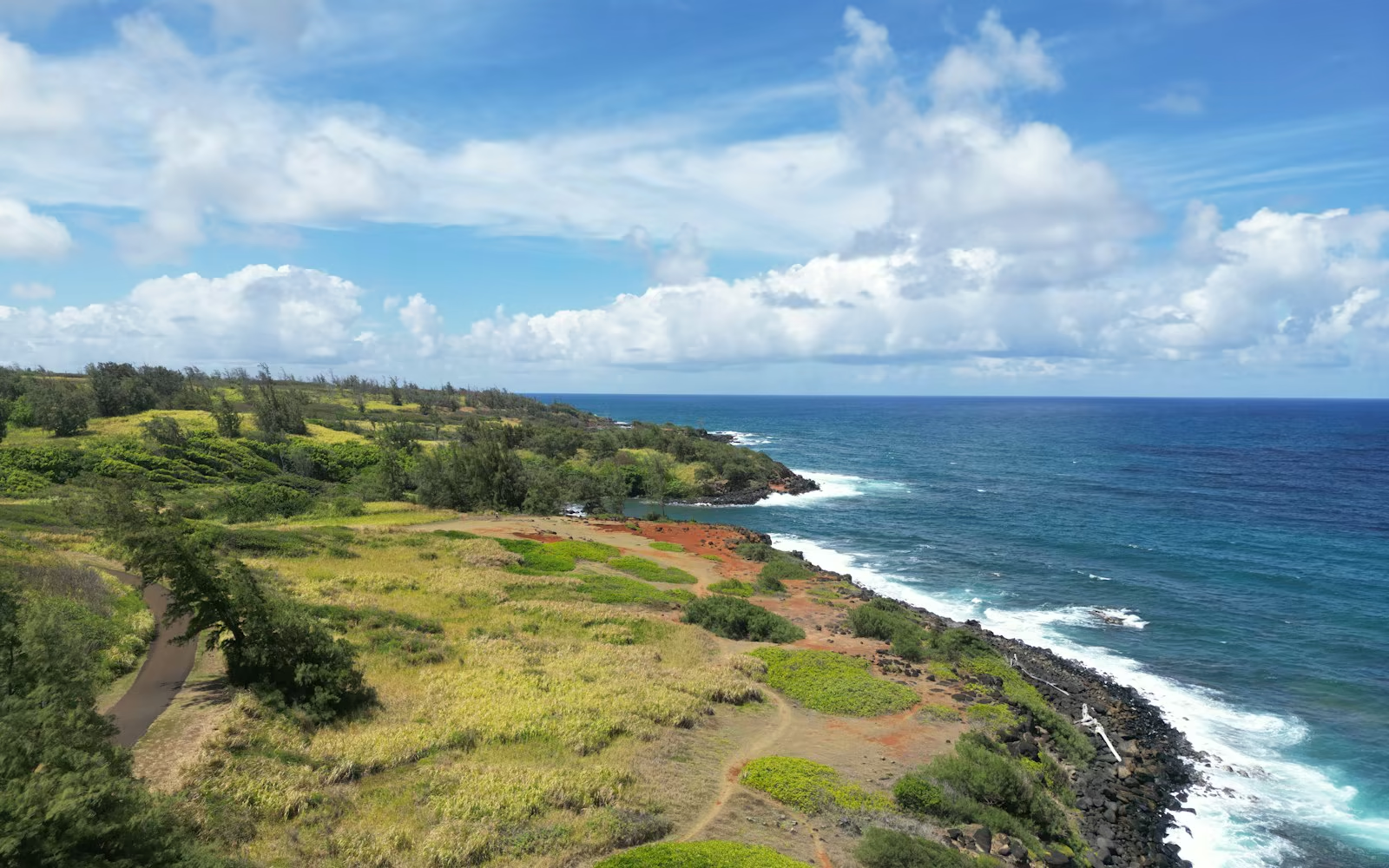
It took years of working outdoors — on the shores of Kauaʻi, in the middle of the night, in the rain — before I understood what that missing thing was. It was life. The studio removes the world so you can hear the instrument. But the world, it turns out, is part of the instrument.
What Kauaʻi Teaches About Time
Recording in nature changes your relationship with time before it changes anything else.
In a studio, time is measured. The DAW cursor moves in straight lines. Tempos are set in BPM. Edits happen at exact milliseconds. This precision is useful, but it also subtly trains the musician — and the music — toward a kind of rigidity. Everything that doesn’t fit the grid gets moved or cut.
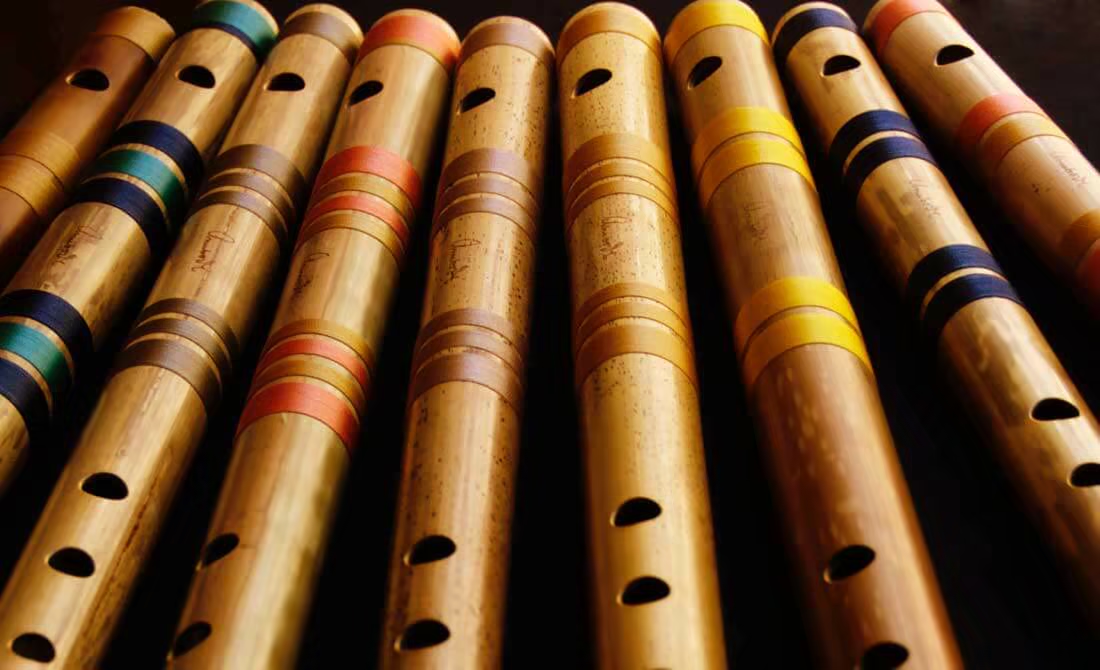
Outside, there is no grid. The tide has its own rhythm, and it does not synchronize to anything you are doing. Wind gusts arrive mid-phrase and alter the tone of the flute in ways no plugin can reproduce. A bird calls from somewhere in the canopy, perfectly placed, at a moment you could never have composed.
What this teaches is responsiveness. You cannot plan the session around these events. You can only remain open to them, and trust that the music that emerges from that openness will be more alive than anything you could have arranged. This is, I have come to believe, the foundational skill of ambient music: not composition, but receptivity.
A Morning Session at the Shoreline
A typical morning session begins before the sun is fully up. The light is blue and horizontal. The air is damp. There is a mist that sits over the water on clear mornings, hovering just above the surface before it burns off.
I set up recording equipment far enough from the waterline that the waves are textural rather than dominating — present, audible, but not overwhelming. Then I simply listen for ten or fifteen minutes before playing anything. This listening period is not wasted time. It is essential calibration. I need to understand what the land is already doing before I add anything to it.
What I am listening for: the rhythm of the waves, which has a pulse even when it is irregular. The way that pulse spaces out after a set of larger swells, opening long silences that feel almost like held breath. The birds — on Kauaʻi, often the ʻōpeʻapeʻa, the Hawaiian hoary bat in the early hours, or the high, repeating call of the white tern — and where they are sitting in the stereo field. The wind direction, which determines whether I will be recording into the wind (a cleaner signal, more resistance at the embouchure) or with the wind behind me (warmer, slightly less controlled).
When I am ready, I begin with drone. Often this is a tanpura or shruti box, a sustained harmonic reference that gives the flute something to move against. I choose the key based on what resonates with the morning’s feeling — not the morning’s concept, but the actual felt quality of being in that place at that time. This is intuitive rather than analytical, and it is one of those aspects of the practice that I cannot fully explain or teach. You feel when the key is right. It is as if the land recognizes something.
Layering Without Crowding
The temptation in ambient production is to fill space. To add texture upon texture until the track has the density of a wall of sound. This approach can produce impressive results, but it also tends to remove exactly what makes ambient music therapeutic: the spaciousness.
My approach is almost the opposite. I start with the minimum. A field recording. A drone. And I ask: does this already feel complete? Often, the answer is closer to yes than I expect. The next question is whether adding anything will make it more open, or less.
This is the distinguishing question in ambient music for healing, as opposed to ambient music purely for listening: will this serve the listener’s nervous system, or will it serve my desire to add something? These are not always the same. More texture can make a piece more interesting to listen to analytically while simultaneously making it less effective as a vessel for rest and openness. The nervous system prefers space to stimulation.
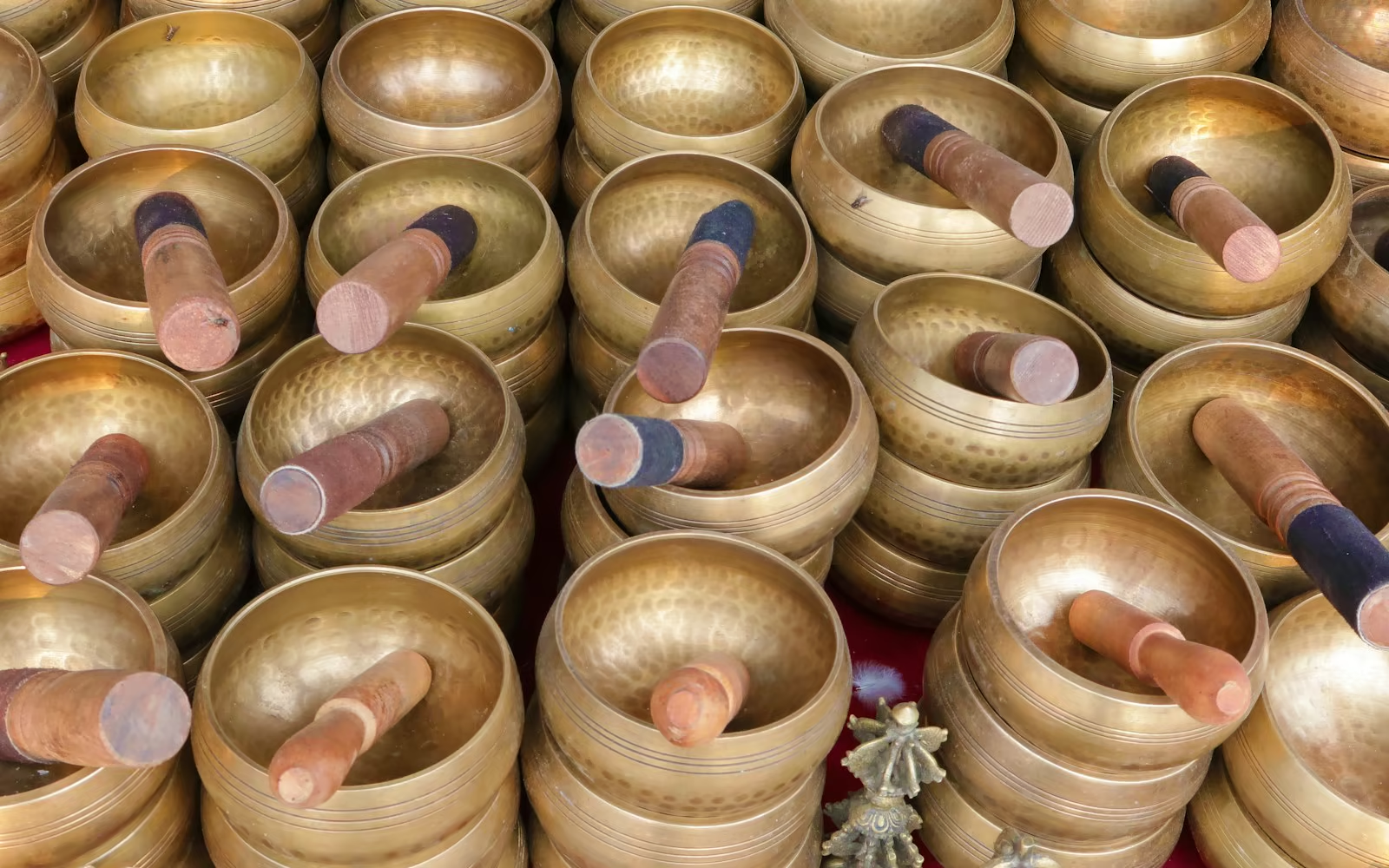
When I do layer, I work slowly. A single long flute tone. Then silence. Then a subtle harmonic shimmer — a crystal singing bowl, or a faintly processed flute overtone that blends with the natural resonance of the recording space. Then more silence. I am always listening for what wants to be there, rather than deciding what should be there.
The Field Recording as Composition
On Kauaʻi, nature does a great deal of the compositional work. This is not a metaphor. The natural soundscape of the North Shore, or the shoreline at Hāʻena, or the interior valleys above Waimea — these environments have sonic structure. There are foreground sounds and background sounds. There are rhythmic patterns in the waves and stochastic ones in the wind. There is a natural EQ shaped by the vegetation, the humidity, the proximity to the ocean.
When I record in these places, I am not so much composing as curating. I am choosing where to stand, when to play, when to be silent, and what to keep in the edit. The land offers material. I arrange it. And the closer I stay to what the land is already doing — rather than trying to impose something on top of it — the more the final recording sounds like being there.
This is the deeper intention behind the Kauaʻi recordings: not to document a place, but to transmit an atmosphere. When someone puts on headphones and listens at home, in a city, in a stressful moment, I want them to feel the specific quality of a morning on the North Shore. The moisture. The space. The sense of being held by something very old and very patient.
Sound can do this. Not always, and not for everyone. But when it works, it works because the recording itself is honest — because the land was genuinely present in the making of it, and that presence has been preserved.
On Leaving Things In
One of the most common questions I get about the outdoor recordings is whether I remove the imperfections: the wind bursts that alter the flute tone mid-note, the distant vehicle on the road above, the moment where a wave arrives louder than expected and briefly dominates the mix.
Mostly, I leave them in.
The wind that moves through a phrase is the sound of the air that was moving around me as I played. Removing it would be like removing the breath from a vocal recording — technically cleaner, but fundamentally dishonest. The imperfection is information. It tells the listener’s nervous system that this is real, not constructed. That the person playing was actually there, in weather, in a place, at a specific time of day.
We are so conditioned by produced, perfected music that something in us has learned to listen for realness as a signal of safety. When the sound is too perfect — too even, too controlled, too clean — it can produce a subtle vigilance rather than rest. The imperfect recording, by contrast, relaxes that vigilance. It says: this is real. This is safe. Nothing here is trying to manipulate you.
I think of those moments not as flaws to be corrected, but as gifts the morning offered. The wind gusts. The unexpected wave. The bird that called at exactly the right time. These are the moments I am most grateful for when I listen back — the moments where Kauaʻi stepped into the music and made it something I could not have made alone.